Friday, June 26, 2020

Make Sure You Know What The Jewish Jesus Means


I use the phrase “Yeshua, the Jewish Jesus” to distinguish between the person that lived in the first century who was named “Yeshua” and the person they read about in the New Testament called “Jesus” and “Jesus Christ” and “beliefs about Jesus” that were created centuries after the Romans executed him.

I think there are a lot of people, Christian and Jewish, that have a “Pre-K understanding,” like I used to have, about what “Christian and Jewish” mean. I was an ordained minister and I viewed 2,500 years of history as the histories of two religions – Judaism and Christianity. Back then I viewed “Jesus as the founder of Christianity” and “the Jews as the people that opposed Jesus.” In other words, my whole reality was built around “my beliefs about Jesus.”

In order to know what “The Jewish Jesus” means we have to view Yeshua in the context of the world in which he lived and know what “Christianity” was like in the second and third centuries CE.

The World of Yeshua

Based on our research, Yeshua was born in 6 BCE and was executed around 27 CE. He was a resident of the village of Nazareth in the Galilee for almost his entire life. Around 24 CE he founded a movement and preached “The Gospel of the Kingdom of God.” In Yeshua’s world there were other groups that were much older and larger than his – and some preached a “Kingdom of God” message too. They included the Sadducees, Pharisees, Essenes, Hellenists and Herodians. They were all “Jewish” too.

Understanding what “Jewish” means in relationship to Yeshua,
requires knowing what distinguished Yeshua’s group from
the Sadducees, Pharisees, Essenes, Hellenists and Herodians –
and what Yeshua’s group shared with them.

Yeshua had attended the synagogue in Nazareth all of his life. He had gone with his family to Jerusalem to celebrate the major festivals at the Temple all of his life. Two things members of the above groups shared were God’s covenant with Abraham and a commitment to the Torah. Yeshua became a part of God’s covenant with Abraham when he was circumcised and he made it very clear that he was totally committed to the Torah.

Yeshua clearly worshiped the same God as the members of the above groups and the Temple in Jerusalem was the closest place a person could come to His presence. He kept many of the same Jewish customs as members of the other groups, and just like them, he had his unique interpretations of words of the Torah. All of the apostles were “Jewish” like him. His teachings were about Jewish things that his Jewish audiences understood.

Early Christianity

A lot is known today about Christianity during the second and third centuries. It was a period of rich theological diversity that surprises most Christians today.

● Christian Beliefs About God -- Some Christians believed that there was only one God, the Creator of all there is. Other Christians insisted that there were two different gods — a God of wrath and a God of love and mercy. These were not simply two different facets of the same God, they are two different gods. And there were other Christians that insisted that there were twelve gods -- others said there were thirty gods – and still others said there were 365 gods! All these groups claimed to be Christian, insisting that their views were true and had been taught by Jesus and his followers.

● The Christian New Testament -- Why didn’t the groups above simply read their New Testaments to see whose views were wrong? It is because the New Testament Christians read today did not exist. All the books of the modern New Testament had been written by this time, but there were also lots of other books that claimed to be written by Jesus’ own apostles — other gospels, acts, epistles, and apocalypses.  They had very different perspectives from those found in the books that eventually came to be called the New Testament. The New Testament itself emerged out of these conflicts over God (or the gods), as one group of believers acquired more converts than all the others. That group decided which books should be included in the canon of scripture.

● No Centralized Theology -- During the second and third centuries, there was no agreed-upon canon of New Testament books and no agreed-upon theology. There was a wide range of diversity: diverse groups asserting diverse theologies based on diverse written texts, all claiming to be written by the apostles of Jesus.

● Some Christians Celebrated Passover – As late as 170 CE the Christians in Asia continued to observe the Passover.

But everything changed with “the conversion” of Constantine the Great, Emperor of the Roman Empire. The event that changed everything was the Council of Nicea in 325 CE, a meeting called by Emperor Constantine. He invited all Christian bishops of the Roman Empire to attend. However, because Christians had witnessed many persecutions in the first three centuries – some by officials of the Roman Empire and others by pagan mobs – many bishops chose not to attend.

By the end the fourth century, the Roman Catholic Church emerged as a religion backed by the authority of Roman Emperors and institutions and it gave Christians a theology and a New Testament. It also made Christianity and Judaism two separate mutually exclusive religions.

I hope you found this informative and thank you for reading it.

Shalom,
Jim Myers

☼ Help fund future emails like this one! Click Here to Donate.

☼ Subscribe to this Mail List so you won’t miss future emails. It is FREE! Click Here.


☼ Visit the BHC website and you will find much more! Click Here.

SOURCES
● Misquoting Jesus: The Story Behind Who Changed the Bible and Why By Bart D. Ehrman © 2005; HarperCollins Publishers, New York, NY; pp. 152, 187.

Friday, June 19, 2020

Exploring Biblical Heritages or Blind Faith in Unexamined Beliefs?


The Bible is one of the most important books in the world because people of every nation, people of every color and race, and people that speak thousands of languages read it, believe in it and used it to learn about God and what God wants them to do. But, Bible readers also go to war against other Bible readers. Why?

We call finding an answer to that question -- Exploring Our Biblical Heritages.  It is a science based approach to discovering the histories of the Bible and Bible based institutions. It is the journey described on the above graphic, which introduces people to twelve important factors.

#1. Prioritizing facts before unexamined beliefs.

#2. Incorporating the roles DNA and the brain play in belief systems and human actions.

#3. Learning about the roles three Persian Kings – Cyrus the Great, Darius the Great and Artaxerxes I – played in the creation of Second Temple Judaism [6] (building the Second Temple [#4] and creating the first Torah scroll [#5]).

#7. Translating the Jewish Scriptures from Hebrew into Greek (the Septuagint), which created Hellenistic Judaism and provided future gentile Christians with the Greek Old Testament.

#8. Yeshua, the Jewish Jesus, created a Jewish movement he called “The Kingdom of Heaven.” It was not a new non-Jewish religion.

#9. Roman authorities governed the Jewish homeland, crucified Yeshua, and executed Peter, Paul and Yeshua’s brother Jacob (called James in modern Bibles). A Roman citizen from Tarsus created the movement in which members were first called “Christians.”

#10. Roman Emperors -- specifically Constantine the Great, Flavius Claudius Julianus, Valentinian I and Theodosius the Great -- played major roles in the creation of the Roman Catholic Church and Rabbinic Judaism.

#11. Decisions about which books are in the Christian Bible were made Roman Catholic bishops and councils.

#12. Without the biblical based phrases – “all men are created equal” and “they are endowed by their Creator” – the United States of America as we know it would not exist.

I was an ordained minister and I was unaware of any of the factors above. My professional education taught me how to persuade people to believe my church’s doctrines (listed in our statement of faith) and defend them against people who attacked them.

I believed that people had to believe the right things
to go to Heaven so they would spend eternity with God
instead of spending eternity in Hell with the Devil!

That was my top priority. Today I know when those beliefs originated, who created them, why they were created and how they evolved over the centuries. I also know that simply giving people a new list of “the right things to believe” doesn’t work.

In order to effectively change long-held trusted beliefs
fact based stories about those beliefs get the best results.

Exploring Our Biblical Heritages educational emails are designed to connect readers to those stories, provide additional information and pose questions for explorers to consider and discuss. Thank you for being an explorer and reading this email.

May your explorations make your life safer, more fulfilled and happier.
Jim Myers

☼ Contact me (Click Here).

☼ Help fund future emails like this one! Click Here to Donate.

☼ Subscribe to this Mail List so you won’t miss future emails. It is FREE! Click Here.


☼ Visit the BHC website and you will find much more! Click Here.

Thursday, June 18, 2020

The Jewish Jesus and the Salvation of Gentiles


Did the Jewish Jesus require gentiles to convert to Judaism in order to be saved? That is a question I hear a lot and the answer is “No.” When the Creator created the Heavens and the Earth he also created a kingdom – he did not create a religion.

● The Heavens and the Earth are the Creator’s Temple in the first story in Genesis. (Click here to learn more.)

● The Creator’s Kingdom is a kingdom of creatures “created in his image.” (Click here to learn more.)

The Jewish Jesus was a member of and practiced Late Second Period Temple Judaism. The Jerusalem Temple and the Laws of Moses played major roles in his life. His movement was a Jewish Movement. But his primary message was about the “Kingdom of God (Heaven)” and he preached it to Jewish audiences, but it wasn’t a message that was exclusively for Jews. Pay close attention to his words below:

When the Son of Man comes in his glory, and all the holy angels with him,
then he will sit on the throne of his glory. All the nations will be gathered before him.
(Matthew 25:31-32a)

This is the judgment of all of the nations of the earth. Connected to his Kingdom of God message, was an urgent warning that the Great Day of Judgment will come soon. He believed it would happen in his lifetime. The Great Day of Judgment will be a repeat of what happened when God caused the Great Flood – the earth would be cleansed of people that did violent and evil things! For the Jewish Jesus, only those in the Kingdom of God will be saved from the fire that God is going to use to cleanse the earth this time (Malachi 4:1).

“For behold, the day is coming, burning like an oven,
and all the proud, yes, all who do wickedly will be stubble.
And the day which is coming shall burn them up,” says the Lord of hosts
.”

God saved Noah and his family because Noah was the only man of integrity -- a tzadiq – that God saw on earth. A tzadiq is a man that does acts of tzedaqah. In English translations, tzadiq is translated as “righteous” and “tzedaqah” is translated as “righteousness,” but the English words do not reflect the Hebrew meanings. I encourage you to incorporate the Hebrew words in your vocabulary. The Jewish Jesus taught that those who did acts of tzadaqah will be the ones that will be saved from the fires – just like Noah was saved from the waters. (Matthew 25:34, 37a).

Then the King will say to those on his right hand
(those who did tzedaqah) “Come, you blessed of my father,
inherit the kingdom prepared for you from the foundation of the world.”

God does not judge the nations of the earth by Jewish laws. He uses the standard that existed long before the Jewish nation existed. It will be the standard the Creator uses to judge his actions -- the TOV Standard:

Acts that are TOV protect and preserve lives,
make lives more functional and increase the quality of life.

Now pay close attention to the type of acts the people had done, which Jesus said would be saved:

They gave food to the hungry, gave drink to the thirsty,
brought a stranger into their homes, gave clothes to the naked,
visited the sick, and went to those in prison.
(Matthew 25:35-36)

They are acts are TOV. They affected lives in good ways – and, interestingly, Jesus was quoting Isaiah (58:6-8):

● Is this not the fast that I have chosen: to loose the bonds of wickedness, to undo the heavy burdens, to let the oppressed go free, and that you break every yoke?

● Is it not to share your bread with the hungry, and that you bring to your house the poor who are cast out, when you see the naked cover him, and do not hide from your own flesh?

● Then (after you do the things above) your light shall break forth like the morning, your healing shall spring forth speedily, your acts of tzedaqah shall go before you; the glory of Yahweh shall gather you.

Tzedaqah was one of the most important words in the Jewish vocabulary in the Late Second Temple Period – and it still is in Rabbinic Judaism.

● Tzedaqah is greater than all sacrifices.

● Tzedaqah hastens the redemption.

● Tzedaquah atones for sins.

● Tzedaqah saves one from death.

The view of the Kingdom of God (Heaven) the Jewish Jesus taught was not the only view that existed. Some groups taught that the Kingdom was only for Jews, others taught the Kingdom was only for Jews that followed their interpretations of the Laws of Moses, still others taught the Kingdom was for Jews and Gentiles that did tzedaqah – and there were other Jewish views too.

But there is one thing that no Jewish group taught, including the Jewish Jesus and even the Roman Catholic Church:

The salvation of individuals.

You can credit Martin Luther with the creation of individual salvation. In the Jewish Scriptures and the teachings of the Jewish Jesus – salvation is a group thing. When Luther was excommunicated from the Roman Catholic Church -- he lost the only way of salvation. Luther had to come up with “a new way to be saved” – and he did it!

No Christian group before the 16th century taught that belief!

How important is that information? We believe it should be of great interest to any Christian and that is one of the reasons we Explore Our Biblical Heritages. We want to identify the origins of our beliefs!  Please share and discuss this with others. Thank you for reading this.

May your life be blessed with an abundance of TOV,
Jim Myers

☼ Help fund future emails like this one! Click Here to Donate.

☼ Subscribe to this Mail List so you won’t miss future emails. It is FREE! Click Here.


☼ Visit the BHC website and you will find much more! Click Here.

Monday, June 15, 2020

Creating a Vision for Good and a Good Government


The powers of mind, spirit, and body with which we have been created, and which we use in religion and politics, belong to us simply because of who we are. Simply by coming into being as a human we have them. We have the right to keep these powers permanently – that’s what the words “endowed by the Creator” mean in the Declaration of Independence.

Any effort to take these powers away from someone
is an effort to rob him of his fundamental human property.

This leads us to the two of most challenging questions Americans have ever faced.

1. How is it that we come into being as humans in the first place?

2. And how is it that we come not merely to have these powers of mind, spirit, and body but also to have a right to them?

In the Declaration of Independence these questions, in turn, lead us straight back to the Creator.

“We hold these truths to be self-evident, that all men are created equal, that they are endowed by their Creator with certain unalienable Rights . . . That to secure these rights, Governments are instituted among men . . . .”

The answers to the questions above are the same in the Declaration of Independence – “The Creator.” Science provides two answers – DNA and governments. Having “a right to them” and actually “having them” are two very different things. According to the Declaration of Independence – “governments are instituted among men to secure rights.” Science agrees with that answer.

In order for a government to be established by men, they must share a common vision about two things -- the kind of government they want and the definition of “good.” Below is the kind of government the writers of the Declaration of Independence had in mind:

1. A government that pursues the common good.

2. A government that cultivates and protects the rule of law.

3. A government that protects the sovereignty of the people.

4. A government that encourages material prosperity and growth.

5. A government that provides access to justice, security, and peace for the citizens.

If you read my email, The Creator’s Vision and Values for Humanity, you probably noticed similarities between the words of Genesis 1 and those of the Declaration of Independence. Both visions rest upon the meaning of one word – good. That is one of the most important words in English, as are its equivalents in other languages.

The Hebrew word TOV is the word translated “good” in Genesis.

Actions that protect and preserve lives, make lives more functional
and increase the quality of life are TOV – “good for life!”

We created the TOV Center to promote TOV as a universal standard for defining good and measuring human actions. I encourage you to adopt and incorporate the TOV Standard in your life and your decisions.

Thank you for reading this. Please share and discuss it with others.

May your life be blessed with an abundance of TOV,
Jim Myers

☼ Your help would be greatly appreciated! Click Here to Donate.

☼ Subscribe to the TOV Center Mail List -- Click Here. (FREE!)


☼ Visit the TOV Center website (Click Here).

SOURCE:
● Our Declaration: A Reading of the Declaration of Independence in Defense of Equality by Danielle Allen © 2014l Liveright Publishing Corporation, New York, NY; pp. 174, 247.

What Have You Been Taught that God Wants You To Do?


In Christianity and Judaism, the answer to that question is based on which institution you belonged to or identify with. However, historically, the answers of Christian and Jewish institutions fall into two groups and they reflect how members of the religion describe themselves. Since Judaism has been around much longer than Christianity and Yeshua, the Jewish Jesus was “Jewish,” I will begin with Judaism.

Jewish groups describe people who are members of the group as “observant” or “non-observant.” Observant Jews follow the laws in the Torah, as per the explanations and instructions of the Talmud. “Talmud” is the generic term for a large collection of documents that comment and expand upon the Mishnah (Oral the Law), which was written down around 200 CE. Today there are two Talmuds. The Talmud used by observant Jews is the Babylonian Talmud, which was completed around 500 CE. “Non-observant” refers to Jews who are more secular. People who are not Jewish are called “Gentiles.”

Christian groups generally describe people as “believers” or “unbelievers.” “Believers” are people who “believe the right things.” “Unbelievers” are people who “believe the wrong things.” “Right beliefs” are determined by Christian institutions or individuals who “self-identify as Christian.”

The bottom line is that Judaism is about what people do
and Christianity is about what people believe.
   
This creates some very confusing situations:

Jews that are atheists keeping Jewish Laws and
Christians that are believers not doing what Jesus taught.

During the time of Yeshua, the Jewish Jesus, what Jewish people viewed as “observant” was determined by different sects – Pharisees, Sadducees, Essenes, Yeshua Movement -- and the Sanhedrin (highest court of the land). Yeshua called his movement the “Kingdom of Heaven” and membership was based on what people did – not what they believed. Interestingly, the Jewish Jesus, observant Jews of his period and observant Jews today all agree on pikuach nefesh:

The principle in Jewish law that
the preservation of human life overrides virtually any other religious rule.

But today there are thousands of Christian groups and denominations with belief systems that are completely disconnected from human actions. Many believe they have their “ticket to heaven” regardless of what they do or how they treat other people. In my opinion, the primary question for Christians today is:

Should Christians today do what Yeshua taught or ignore him
and believe things people who lived centuries later said they should believe?

The answer to that question plays a big role in how Christians respond to bad things done to other people and themselves. Thank you for reading this. Please share and discuss it with others.

May your life be blessed with an abundance of TOV,
Jim Myers

☼ Help fund future emails like this one! Click Here to Donate.

☼ Subscribe to this Mail List so you won’t miss future emails. It is FREE! Click Here.


☼ Visit the BHC website and you will find much more! Click Here.

Friday, June 12, 2020

What Role Does God Play in Human Actions Today?


As a former pastor and law enforcement chaplain, why something bad thing happened was a question I was asked many times. Many of the answers people give are directly linked to the five belief options below. Keep in mind that the answers are Institutional Truths, Personal Opinions or combinations of both. Making clear distinctions between the type of information beliefs are based on is one of the most important skills you can develop for dealing with the massive amounts of information you encounter every day (click here for more information).

Belief Options About the Role God Plays in Human Actions Today

Option #1: People have freewill to do good or bad things. Bad things happen because people chose to do them or nature caused them – There are reasons that things happen.

Option #2: People have freewill, but God intervenes in events from time to time.

Option #3: God predetermined all human actions at the creation; every person is born with a prewritten, but unknown to them, script of their entire lives – Everything happens for a reason.

Option #4: God and Satan are in a cosmic war for the souls of humans. God is actively engaged in influencing people to do good things, while Satan is actively engaged in influencing people to do evil things – The devil made me do it.

Option #5: People are animals with instincts and human nature.
________________________________________

The lives of billions of people are directly affected by the five belief options above. They influence how people view things that are happening in the world, what they do about those things, what they do not do about those things, what they expect other people to do and what they think God wants them to do.

One of the most important things we must do
is clearly identify the belief option(s) our subconscious mind
uses to make decisions.

The next thing we can do is make sure the roles belief options play are part of conversations about things that are happening today. Those conversations are functions of the conscious mind (the rider), but it is the elephant (subconscious) that exerts the most power.

While we do the things above, we must also identify the sources of our belief options (especially those from institutions) explore their origins and histories. This brings transparency to our thinking process and exposes predatory institutions and individuals.

We are genetically hardwired to be “believing creatures.” We can’t help it. Facts make us aware of what exists in the physical world, but facts tell us nothing about what those things are, how they are related or what our strategies should be when we encounter them. Beliefs give meanings to the things we sensory perceive – and they insert things into our realities that aren’t sensory perceived!

Thank you for reading this. Please share and discuss it with others.

May your life be blessed with an abundance of TOV,
Jim Myers

☼ Help fund future emails like this one! Click Here to Donate.

☼ Subscribe to this Mail List so you won’t miss future emails. It is FREE! Click Here.


☼ Visit the BHC website and you will find much more! Click Here.

Thursday, June 11, 2020

How to Create Order in the Midst of Chaos


Chaos is defined as a state of extreme confusion,
disorder and unpredictable behaviors in which chance reigns supreme.

The chaos we are witnessing today in America is driven by “conflicting versions of what reality actually is” – embedded in streams of information people delivered through mass media and social media devices.

Chaos is created through tsunamis of conflicting information. Creating order requires focusing on the specific pieces of information within those waves, identifying what type of information it is and identifying the source of the information.

Making accurate distinctions between types of information
increases certainty and decreases confusion.
As certainty increases chaos decreases.

We are dealing with three types of information:

● Fact based information.

● Institutional truth based information.

● Personal opinions.

Our brains treat all types of information as if they are of identical value, that’s why creating chaos is easy and it spreads like a wildfire through the masses.

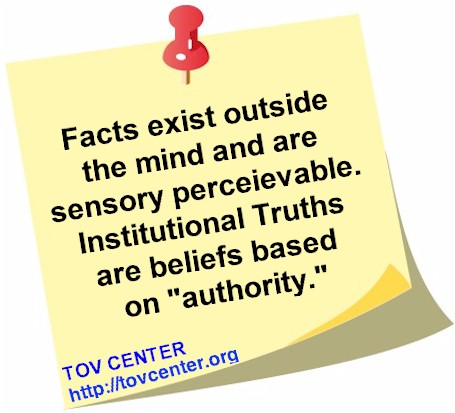
● Fact based information are statements based on things that anyone with functioning sensory organs can perceive.

● Institutional truths are statements backed by institutional authority that are believed to be true.

● Personal opinions are statements made by individuals that are not fact based or institutional truths.

Almost all of the chaos we are experiencing today is linked to conflicting “institutional truths” that originated in political, economic and religious institutions. The primary institutional truths generating conflicts and creating chaos today are money, god and rights.
  
In biblical stories gods are sensory perceived entities, not things that must be “believed in.” In our world, gods are not sensory perceived entities -- groups of people do not see them with their eyes or hear them with their ears. Religious conflicts are really conflicts over “institutional truths about gods.”
Below are a few patterns history has documented many times about people that control religious and political institutions.

● They have institutional and personal agendas.

● They use both forms of human power – persuasion and physical force -- “to promote and protect their Institutional truths” and “to destroy opposing institutional truths.”

● As their institutions gain power and wealth, they invent new stories to legitimize, perpetuate and extend their dominance.

Transparency is an absolute requirement for decreasing chaos.

● Commit to making your belief system large enough to include all of the facts, open enough to be examined and questioned, and flexible enough to change when errors or new facts are discovered.

● Identify who exercises institutional power.

● Identify who benefits from actions of institutions.

● Identify who is hurt or harmed by the actions of institutions.

● Identify who created the institution and why it was created.

● Identify institutions that support it and those that oppose it.

● As you discover accurate information, share it with others.

Thank you for reading this. Please share and discuss it with others.

May your life be blessed with an abundance of TOV,
Jim Myers

☼ Your help would be greatly appreciated! Click Here to Donate.

☼ Subscribe to the TOV Center Mail List -- Click Here. (Subscriptions are FREE!)


☼ Visit the TOV Center website (Click Here).